Rug Placement Living Room UK: The Complete Layout Guide
Where you place your rug matters as much as the rug itself. The right placement ties furniture together, defines zones, and makes a room feel intentional. Here's how to get it right in any UK living room.
Quick Answer
- • Front legs on — most popular UK layout, works with 200×290 cm rugs
- • All legs on — best for large rooms, needs 240×340 cm or bigger
- • Floating — suits small rooms, use 160×230 cm centred in the seating area
- • Always leave 30–45 cm of bare floor between the rug edge and the wall
Why Rug Placement Matters
A beautifully designed rug placed incorrectly will always look wrong. Too far from the sofa and the room feels disconnected. Too small and floating in the centre, and it reads as an afterthought. Correct rug placement in your living room creates a defined seating zone, adds visual weight, and makes the space feel considered.
The good news: there are only three core layouts to learn. Once you know them, choosing becomes straightforward. Not sure which rug size you need first? Start with our complete rug size guide for UK living rooms.
The Three Rug Placement Layouts
1. Front Legs On — The UK Standard
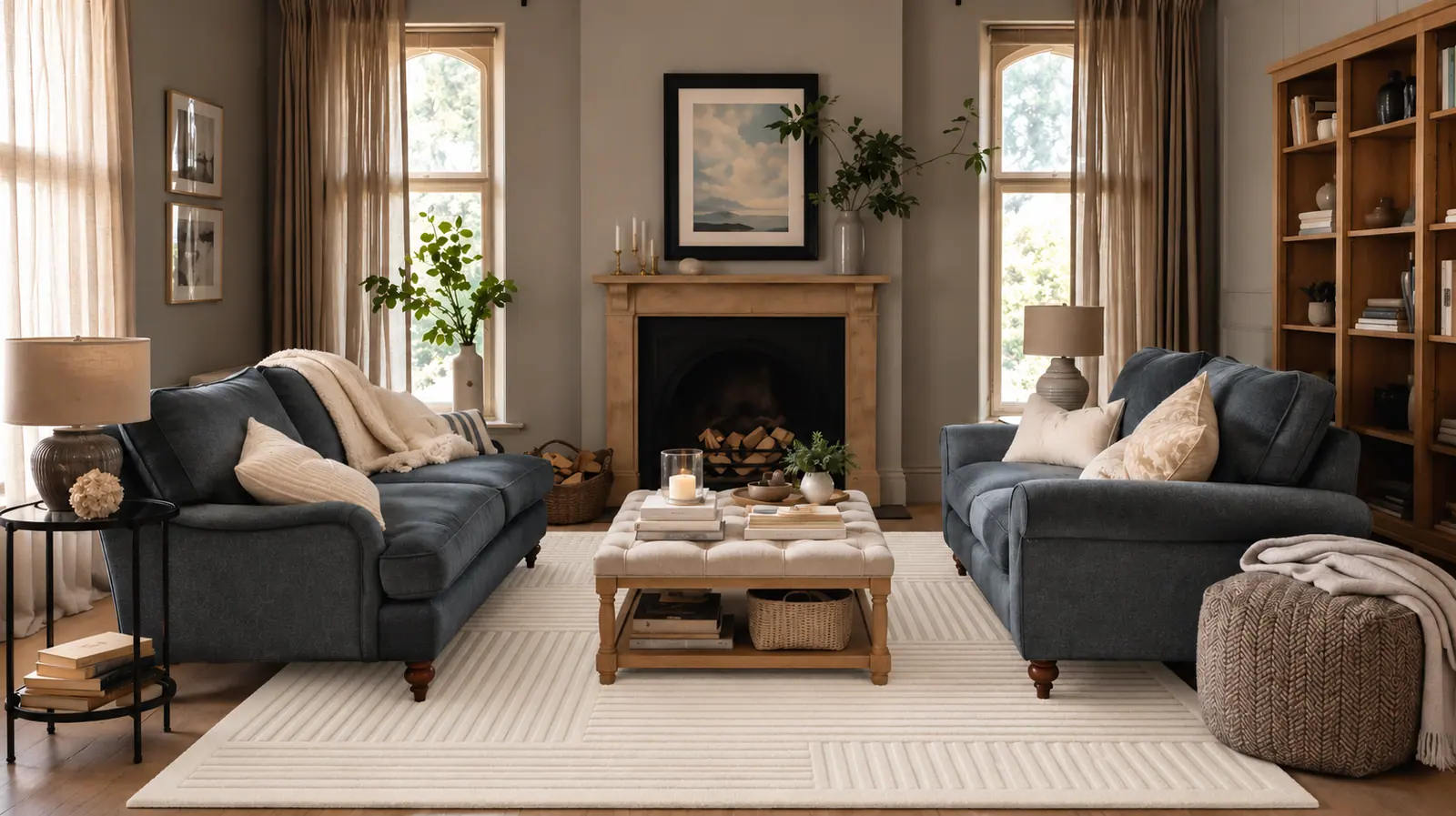
The front legs of your sofa and armchairs sit on the rug. The back legs remain on the floor. This is the most common rug placement in UK living rooms because it balances definition with practicality — you don't need an enormous rug to make it work.
Best size: 200×290 cm for a standard 3-seater sofa arrangement. For L-shaped setups, move up to 240×340 cm. Browse our living room rug collection for designs that suit this layout.
2. All Legs On — The Grand Layout
Every piece of furniture — sofa, armchairs, side tables — sits fully on the rug. This creates a unified, enveloping feel and works best in larger rooms or open-plan spaces where you need to define a distinct seating zone.
Best size: 240×340 cm minimum. For generous living rooms, 300×400 cm delivers the most impact. See our large rugs guide for more detail on oversized dimensions.
3. Floating — The Small-Room Solution
The rug sits in the centre of the seating area without touching any furniture. This works well in compact rooms, rental spaces, or when you want a casual, layered aesthetic.
Best size: 160×230 cm. The rug should be large enough that it fills the gap between the sofa and the opposite seat or TV unit — never smaller than the coffee table.
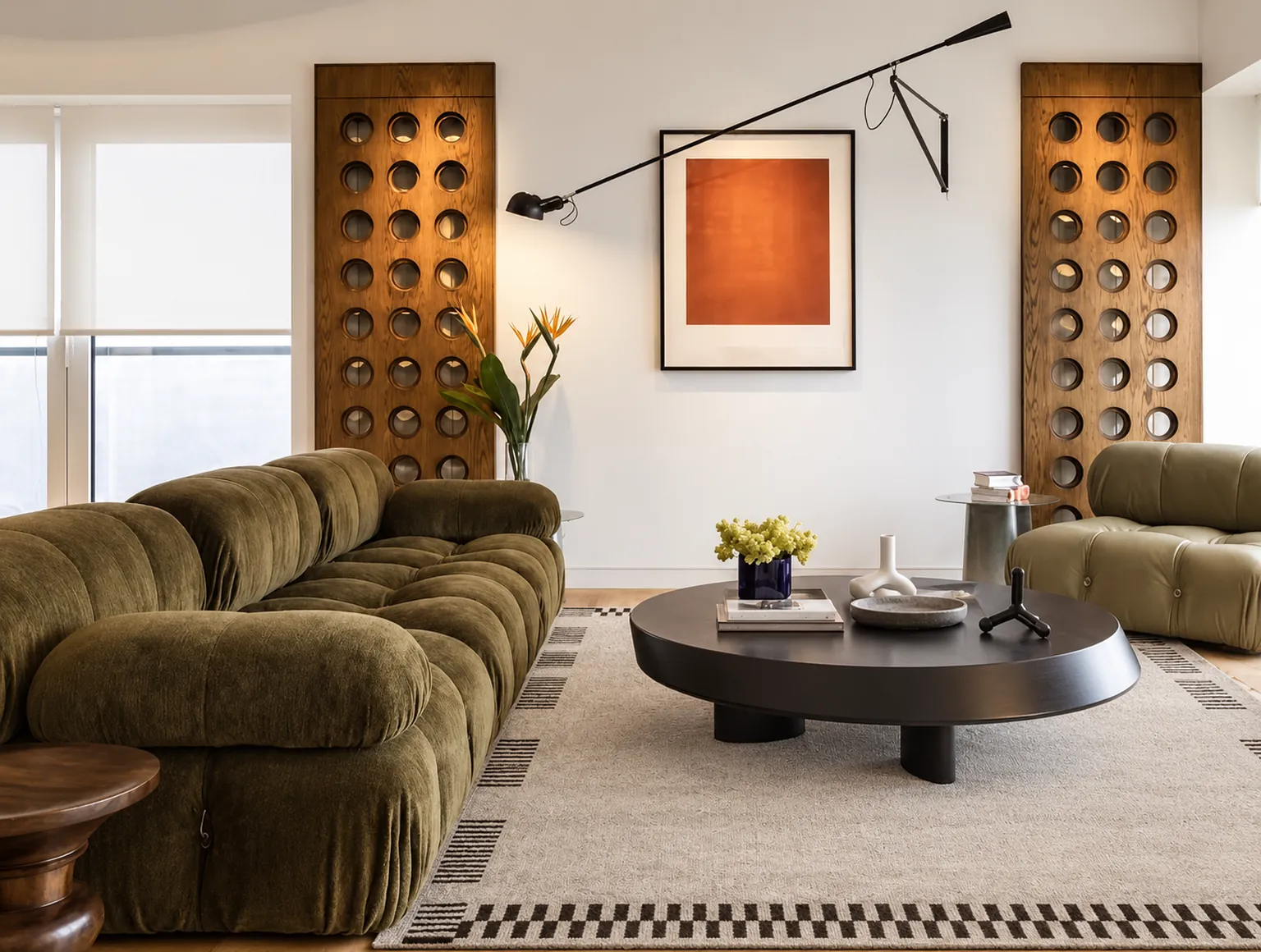
The all-legs-on layout creates a unified, cohesive seating zone.
Rug Placement for Common UK Living Room Shapes
Rectangular Rooms
The most common layout in UK homes. Use a rectangular rug aligned with the sofa, leaving an even border of floor on each side. The front-legs-on approach works perfectly here.
Open-Plan Living/Dining
Use the rug to define the living zone separately from the dining area. The rug should sit entirely under the sofa grouping, creating a visual boundary. Consider a second rug under the dining table to mirror the zoning.
L-Shaped Rooms
Place the rug in the primary seating area — usually the section with the sofa facing the TV or fireplace. A 300×400 cm rug can unify both sections of an L, but a smaller rug focused on one zone often looks more intentional.
Bay Window Rooms
Bay windows create irregular floor space. Standard sizes often don't fit cleanly — this is where a custom-sized rug makes all the difference. Centre the rug relative to the seating, not the bay.
The Floor Border Rule
Leave 30–45 cm of bare floor between the rug edge and the nearest wall. This border frames the rug and stops the room from feeling like wall-to-wall carpeting. In smaller UK rooms (under 15 sqm), 20–30 cm is acceptable.
The border should be consistent on all sides. An uneven border — 10 cm on one side and 50 cm on the other — makes the rug look off-centre even when it isn't.
Common Rug Placement Mistakes
- ×Too small. A rug that doesn't reach the sofa makes the room feel fragmented. When in doubt, size up.
- ×Off-centre. The rug should align with the seating group, not the room's architectural centre.
- ×Ignoring the coffee table. The rug must extend at least 15 cm past the coffee table on every side.
- ×Blocking doorways. Ensure the rug sits clear of door swings — a constant issue in period UK homes.
Choosing the Right Rug for Your Layout
Once you've settled on a layout, colour and texture bring the arrangement to life. Neutral tones — creams, warm greys, soft oatmeals — suit almost every placement style and let the furniture do the talking. Our cream rug collection is a natural starting point for most living room layouts.
Texture also matters. A hand-knotted wool rug anchors a room with substance that flat-weaves can't replicate. Explore our full texture guide or read about whether bouclé rugs are worth the investment.
Frequently Asked Questions
Find the Right Rug for Your Layout
Every rug from The Rug Office is hand-knotted to order — including custom sizes for rooms that don't fit the standard. Browse by room or get in touch for a personalised recommendation.