Jute Rugs: Pros, Cons & Where They Work Best
Jute is the easiest natural-fibre rug to live with – warm in tone, gentle underfoot, and quietly versatile. Here's an honest look at where it belongs (and where it doesn't).

What Is Jute?
Jute is a natural plant fibre grown mainly in Bangladesh and India. After harvest the stems are soaked, stripped, and spun into a soft golden yarn that's then hand-woven or braided into rugs. The result is a rug with real material character – warm beige tones, visible weave, and a tactile, organic finish.
See how it sits against other constructions in our texture guide, or browse our jute rug collection.
The Pros of a Jute Rug
Warm, neutral colour
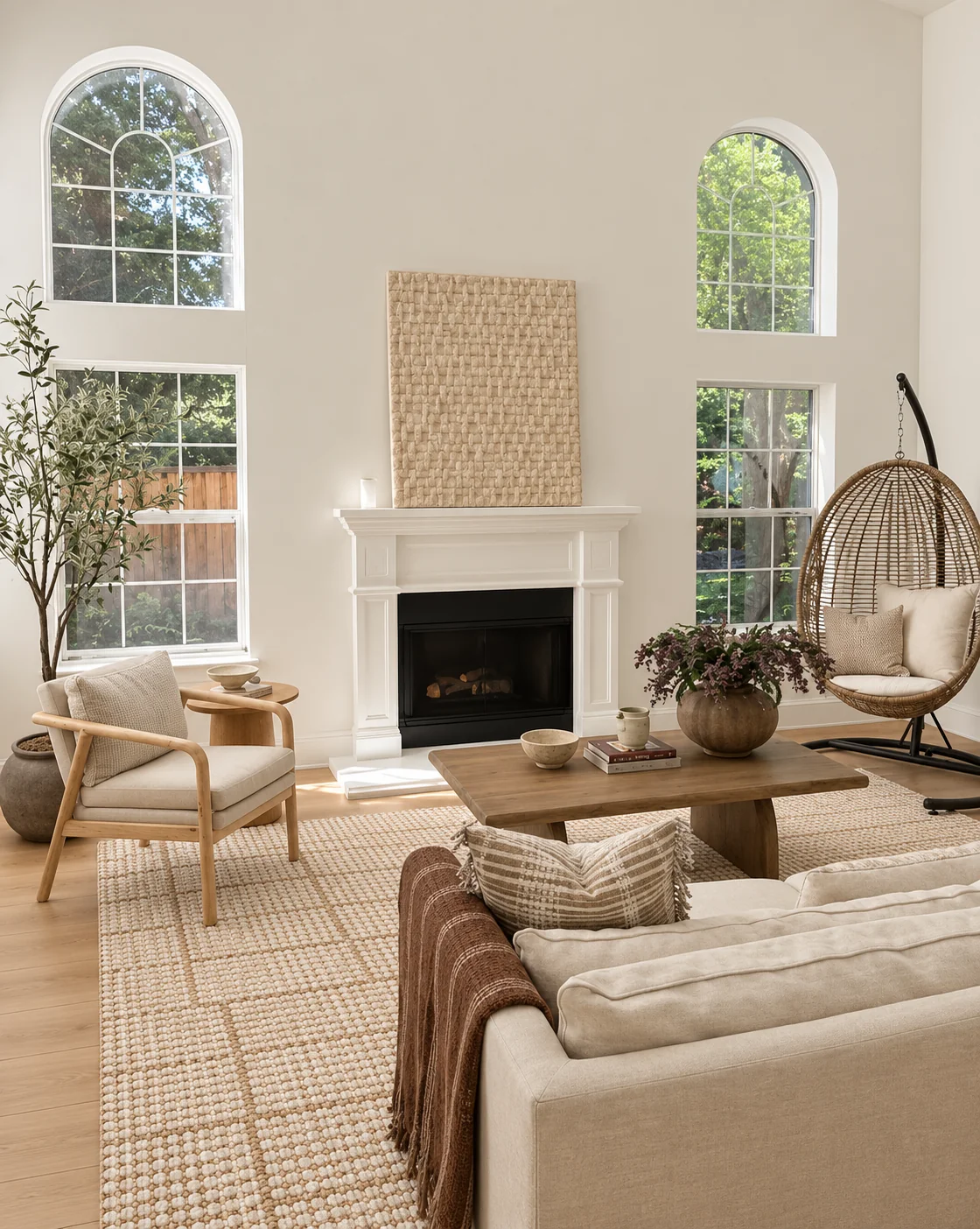
Jute's natural golden-beige tone reads as warm rather than cold – it sits beautifully against linen, oak, rattan and white-painted walls. It's the easiest way to add visual warmth to a minimal room without committing to colour.
Softer than other naturals
Compared to sisal or seagrass, jute is noticeably softer underfoot. It still has texture – you'll feel it through socks – but it's not abrasive, which makes it usable in living spaces, not just hallways.
Sustainable by default
Jute is one of the most environmentally friendly fibres available – fast-growing, biodegradable, and farmed without intensive irrigation or pesticides. It's a rare case where the "natural" label genuinely earns the price.
The Cons to Consider
Not pet- or spill-proof
Jute is absorbent. Wine, coffee, and pet accidents can leave permanent marks if not blotted immediately. In a household with very young children or untrained pets, a wool flatweave is a more forgiving choice.
Shedding (at first)
New jute rugs shed loose fibres for the first few weeks. This is normal and settles down with regular vacuuming – but worth knowing if you're sensitive to it.
Avoid damp rooms
Bathrooms, utility rooms, and humid basements are not the right home for jute. The fibres swell and stain when wet. For damp-prone areas, choose a synthetic flatweave instead.
Where Jute Works Best
Jute earns its keep in living rooms, snug rooms, and any space styled around the beach cottage or Scandinavian aesthetic. It's also one of the best layering rugs – use a large jute as the base, and a smaller wool or bouclé rug on top under the seating area for softness where it matters.
In bedrooms, jute works under the foot of the bed rather than as the main runner – pair it with a smaller cut-pile rug for the bedside. Our bedroom rug placement guide covers the layouts.
Jute vs Sisal vs Seagrass vs Wool
| Fibre | Feel | Durability | Best For |
|---|---|---|---|
| Jute | Soft-textured, warm | Medium | Living rooms, layering |
| Sisal | Firm, scratchy | Very high | Hallways, studies |
| Seagrass | Smooth, slick | High | Sunrooms, low-traffic |
| Wool | Soft, warm | Very high | Everywhere except wet rooms |
If softness is the priority, a bouclé wool rug is a more comfortable alternative – jute wins on tone and sustainability, wool wins on feel.
How To Care For a Jute Rug
Vacuum weekly with a suction-only setting (no rotating brush bar). Rotate the rug every six months to even out wear and sun-fade. Blot – never rub – any spill the moment it happens, using a barely damp cloth.
For deeper care guidance across all rug types, see our how to clean a luxury rug guide.
Sizing a Jute Rug
Because jute is often used as a base layer, it tends to be sized generously – go larger than you would for a wool rug so it extends well beyond your seating. Our large rugs guide covers the dimensions that work for most UK living rooms.
Every jute rug we sell is made bespoke in your exact size. Need a non-standard dimension? Order a custom size rug, made to measure in the UK.
Frequently Asked Questions
Explore Jute Rugs at The Rug Office
Hand-woven jute rugs, made to your exact size and shipped worldwide. Comparing natural fibres? See our sustainable rug materials guide for wool, hemp and cotton alongside jute.